
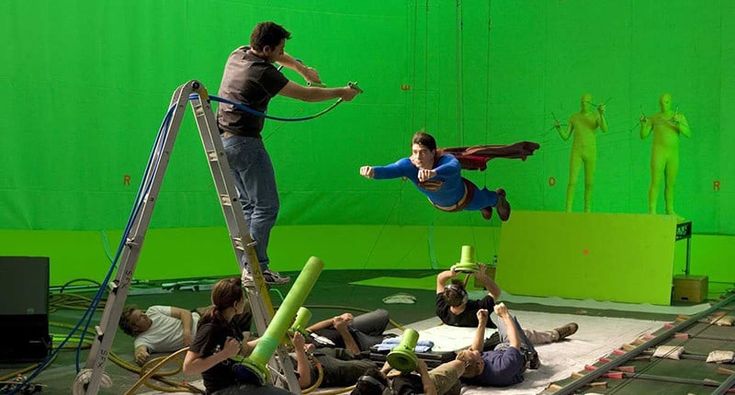
Computer‑generated imagery has reshaped how American action films are planned, shot, and experienced, turning impossible stunts and worlds into believable spectacles. What began as experimental visuals in a few scenes has become a core tool that defines the modern US blockbuster.
Early CGI Experiments in US Action
In the 1970s and 1980s, US filmmakers started testing digital imagery in genre films, using brief CGI segments to enhance live‑action footage. Projects like Westworld and Tron showed that computers could generate geometric environments and stylized perspectives that traditional effects could not easily create.
These early uses were limited by cost and technology, but they introduced American studios to the idea that digital tools could expand the visual language of action cinema. The groundwork laid here would later support much more ambitious sequences involving creatures, vehicles, and large‑scale destruction.
Breakthroughs in 1990s Hollywood Action
The 1990s brought a series of landmark US action movies that proved CGI could handle high‑stakes, photorealistic moments. Films like Terminator 2: Judgment Day and Jurassic Park used digital characters and environment extensions to create liquid‑metal villains and lifelike dinosaurs interacting with real actors.
These breakthroughs showed American audiences that digital effects could feel tangible rather than cartoonish, encouraging studios to invest heavily in CGI‑driven set pieces. At the same time, visual effects houses like Industrial Light & Magic became central partners in designing action scenes from script to final image.
Designing Impossible Action Sequences
As CGI tools improved, US action directors gained the ability to choreograph set pieces that ignore normal physical limits while still appearing grounded. Massive battles, collapsing cities, and gravity‑defying chases in films like Avengers: Endgame and Inception rely on digital environments and simulations layered around live performers.
Pre‑visualization, where entire sequences are built in rough CGI before shooting, lets filmmakers map camera moves, stunts, and destruction with precision. This planning reduces risk on set and allows complex shots that would be too expensive or dangerous to attempt purely with practical effects.
Blending Practical Stunts and Digital Enhancements
Many high‑profile American action franchises now use a hybrid approach, combining real stunts with subtle CGI augmentation. In recent Mission: Impossible entries, for example, actors perform practical feats while digital artists remove safety rigs, extend environments, and add extra debris or vehicles to intensify the danger.
This philosophy treats CGI as a tool to enhance what the camera captured, not to replace it entirely, helping maintain a sense of weight and realism. The result is a visual style where audiences often cannot see where practical work ends and digital enhancements begin.
Changing Audience Expectations and Production Workflows
The success of CGI‑heavy US action films has raised viewer expectations for scale and detail, especially in theaters and premium formats. Audiences now anticipate intricate destruction, seamless digital doubles, and expansive worlds as a basic part of the spectacle, even in mid‑budget genre projects.
Behind the scenes, CGI has also reshaped workflows: editors, VFX supervisors, and animators collaborate from early development, and many key shots are finalized long after principal photography. Digital tools handle everything from de‑aging actors to erasing unwanted elements, making post‑production a central stage of American action filmmaking.
Conclusion
CGI has transformed USA action films from stunt‑driven spectacles with limited scope into visually expansive experiences where reality and digital imagery constantly intertwine. Breakthroughs from the 1990s onward turned visual effects studios into core creative partners, enabling impossible sequences while still leaving room for practical stunts. Today, American action cinema depends on CGI not just for big moments, but as an everyday tool that shapes how stories are conceived, shot, and delivered to increasingly demanding audiences.