
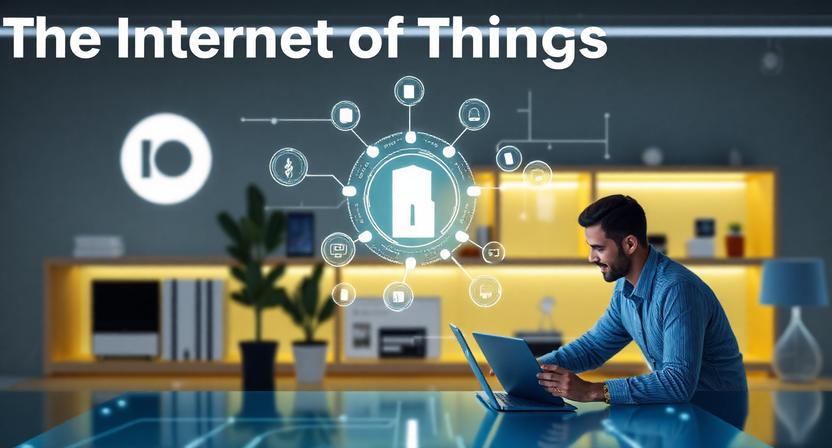
The Internet of Things (IoT) has revolutionized how we live and work by connecting devices and systems to the internet, enabling seamless communication and automation. IoT encompasses a vast network of connected sensors, appliances, vehicles, and industrial equipment, all sharing data to improve efficiency, safety, and convenience. This interconnected ecosystem is shaping the future of smart living and smarter industries.
One of the most visible applications of IoT is in smart homes. IoT-enabled devices such as thermostats, security cameras, lighting systems, and appliances can be controlled remotely via smartphones or voice commands. Smart thermostats learn user preferences and adjust temperature settings automatically, saving energy and reducing bills. Intelligent security systems provide real-time alerts and remote access, enhancing home safety. These devices create a convenient, energy-efficient, and secure living environment.
Connected devices are transforming everyday appliances. Smart refrigerators can monitor expiration dates, create shopping lists, or even order groceries directly from online stores. Smart washing machines optimize water and energy use based on load size. With these innovations, household management becomes more sustainable, cost-effective, and tailored to individual lifestyles. This growing trend is making homes more comfortable, efficient, and responsive to residents’ needs.
IoT has broad industrial applications, too. In manufacturing, sensors track equipment health and predict failures, enabling predictive maintenance. This reduces downtime and repair costs, boosting productivity. In agriculture, IoT devices monitor soil moisture, weather conditions, and crop health, allowing farmers to optimize water and fertilizer usage. These connected systems help conserve resources and improve yield while lowering operational costs.
Healthcare benefits significantly from IoT adoption, with wearable health devices monitoring vital signs and alerting patients or doctors to potential health issues in real time. Remote patient management and telemedicine rely on connected devices to deliver continuous care outside conventional settings. IoT in healthcare improves patient outcomes, reduces hospital visits, and enhances resource management. These innovations are making health services more accessible and personalized.
Furthermore, smart cities leverage IoT for better urban management. Traffic sensors optimize flow, reduce congestion, and decrease pollution. IoT-enabled street lighting adapts brightness based on pedestrian activity, conserving energy. Waste management systems automatically alert collection services when bins are full. These smart solutions contribute to cleaner, safer, and more livable urban environments by increasing efficiency and sustainability.
Security concerns around IoT are critical as increased connectivity also expands attack surfaces. Many IoT devices have weak security protocols, making them vulnerable to hacking and data breaches. Manufacturers and users must prioritize strong encryption, regular firmware updates, and secure authentication. Industry standards and regulations are evolving to ensure IoT devices are designed with safety and privacy as core features.
The future of IoT lies in integration with emerging technologies like artificial intelligence (AI) and 5G networks. AI processes vast data streams from connected devices to generate actionable insights and automate decision-making. Meanwhile, 5G’s high speed and low latency enable real-time communication among billions of IoT devices, powering smarter cities, autonomous vehicles, and industrial automation. These advancements will push IoT into new realms of innovation.
As IoT expands, challenges include data privacy, interoperability, and ethics. Protecting user data from unauthorized access and ensuring device compatibility across different manufacturers is essential for trust and widespread adoption. Governments, tech companies, and consumers must collaborate to develop robust policies and standards that safeguard privacy while enabling technological progress.
In conclusion, IoT is fundamentally transforming our environments, from homes to industries. Connected devices improve energy efficiency, safety, healthcare, and urban management, enabling smarter and more sustainable living. As technology advances, addressing security and privacy concerns will be vital to unlocking IoT’s full potential. The ongoing evolution of IoT will continue to reshape the way we connect, automate, and innovate, promising a smarter, more efficient future for all.